
Luxorides Digital Platform
A multi-application digital platform combining a modern public website, visual content management, product listings, page-level SEO, secure media delivery, legacy-route compatibility, and a Fleetovo-powered customer booking application.
- Sole Full-Stack Developer & Technical Owner
- Website modernisation, content platform, catalogue, booking application, and media infrastructure
- URV India Pvt. Ltd.
- Company product · sole developer responsible for technical implementation · collaboration with business and design stakeholders
- Next.js
- Tailwind CSS
- MySQL
- Prisma ORM
- Puck Editor
- Spring Boot
- Fleetovo APIs
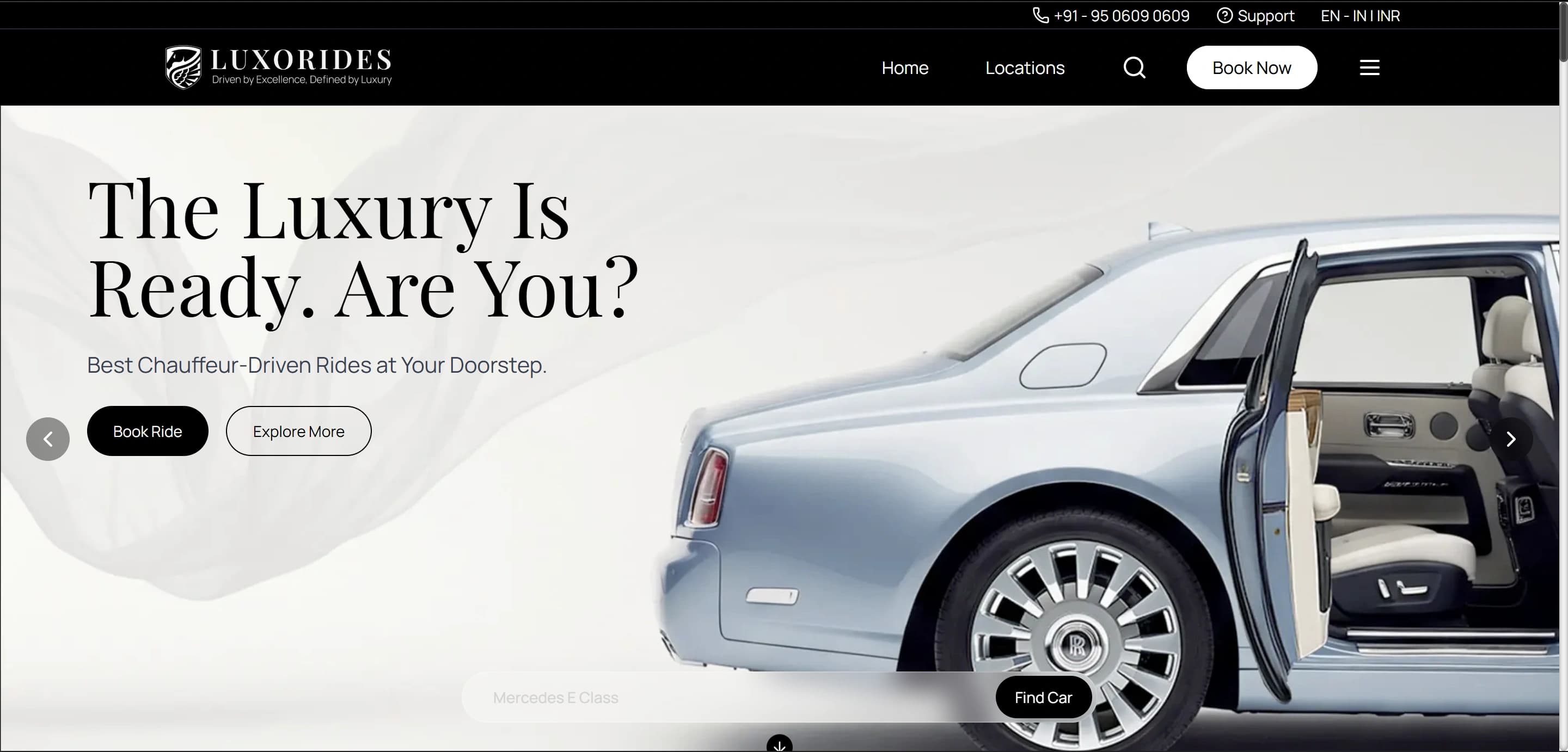
The project in operational terms.
Scope, complexity, responsibility, and business outcomes are described without unsupported statistics.
What was built?
A Next.js website, Next.js administration platform, Puck-based visual page system, central product catalogue, page-level SEO controls, legacy-page registry, self-hosted media service, and Fleetovo-backed customer application.
Who uses it?
Public visitors and customers use the website and booking application; authorised editors and administrators manage content, products, SEO, redirects, and media.
Why does it matter?
The platform needs to modernise an established website without breaking valuable HTML routes or forcing an immediate full migration.
What did Amit own?
Amit connected architecture, implementation, Figma design coordination, reusable Puck sections, content, SEO, products, legacy routes, media, and booking requirements.
What changed?
Luxorides can modernise progressively while managing modern pages, products, metadata, redirects, media, and customer bookings through maintainable systems.
Understand the operation before the technology.
The existing Luxorides website contains static HTML pages with established URLs. Removing them during a full rewrite would risk breaking links and discarding useful route history.
The modernisation strategy therefore treats legacy compatibility as an architectural boundary: required HTML pages can continue to be served, modern pages can replace them gradually, and deprecation or redirects can be controlled rather than improvised.
Product capabilities.
Capabilities describe the product; Amit's contribution is documented separately below.
Public website and progressive migration
Next.js and Tailwind CSS modernise the public experience without deleting required legacy pages.
- Preserve established URLs
- Continue serving selected legacy HTML pages
- Modernise routes gradually
- Control permanent or temporary redirects where required
Administration and Puck page builder
A Next.js, MySQL, Prisma, and Puck administration platform shares the core website database.
- Registered reusable website sections
- Drag-and-drop composition and reusable templates
- Publish supported page types to configured routes
- Structured editing without changing source files for every page
SEO and product catalogue
Page metadata and product information remain centrally managed.
- Per-page title, description, canonical URL, robots, Open Graph, structured data, and supported social metadata
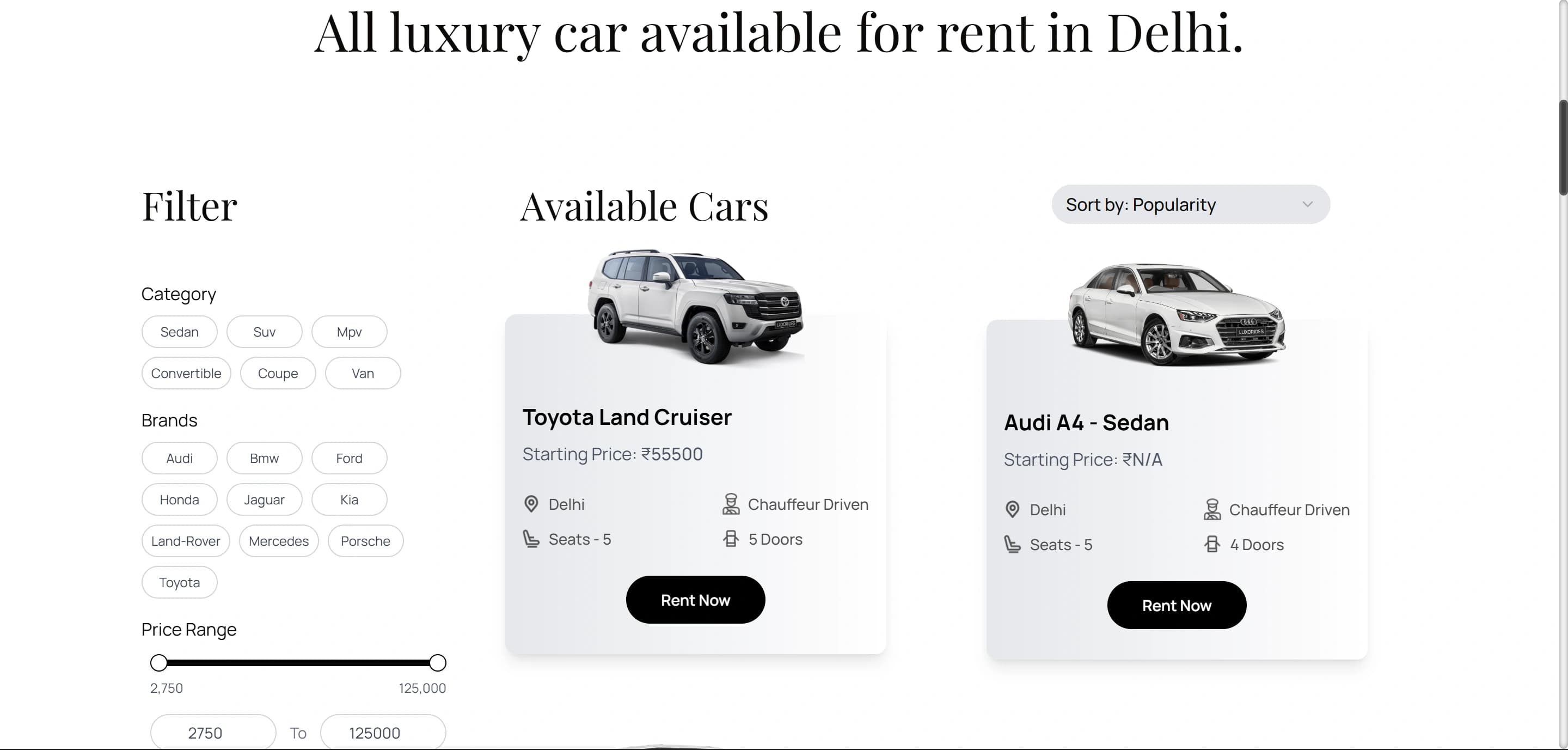
- Central product catalogue
- Reusable featured-product sections
- Editor-controlled product selection, order, and placement
Media and customer booking
Separate services support media delivery and operational customer workflows.
- FiloraFS-Lite-based Spring Boot media and file service
- Secure upload, retrieval, and controlled delivery
- Fleetovo-backed customer bookings, history, payments, and invoice downloads
- Consistent data between customer and employee systems
Amit's contribution and responsibilities.
Architecture, implementation, technical ownership, delivery coordination, production responsibility, and stakeholder collaboration are described separately to make individual contribution explicit.
01
Architecture
Designed the progressive migration, shared content and product data, media-service, and Fleetovo integration boundaries.
02
Implementation
Delivered the Next.js applications, reusable sections, administration workflows, SEO controls, media boundaries, and Fleetovo integrations as the sole developer.
03
Technical ownership
Worked with business and design stakeholders, translated approved Figma and product requirements into implementation, and owned the resulting technical delivery decisions.
04
Delivery coordination
Connected Figma design, content, SEO, product, administration, media, legacy-route, redirect, and customer-booking requirements.
05
Production ownership
Maintains compatibility between established HTML routes and modern Next.js pages through controlled migration and redirect decisions.
06
Stakeholder collaboration
Converted business requirements and approved Figma designs into implementation-ready sections and page templates while collaborating directly with business and design stakeholders.
The boundaries that shaped the work.
These are product and delivery constraints, not a disclosure of private production configuration.
Established routes
Valuable public URLs must not disappear during modernisation.
Supported composition
Administrators compose registered sections and supported page types, not arbitrary executable code.
Shared content truth
Products and page-level SEO should remain central rather than duplicated across routes.
Media isolation
File storage is separated from the public web application and is not described as a global edge CDN.
Authenticated administration
Administration and internal media controls are not presented as unrestricted public applications.
Progressive legacy-to-modern platform architecture
A static, keyboard-inspectable model with visible relationships and a complete text alternative.
Luxorides progressive migration architecture
Modern and legacy delivery coexist behind controlled route and content decisions.
Public and customer experiences
Modern, legacy-compatible, and booking surfaces.
- Next.js public website
Modern pages, catalogue presentation, metadata, and responsive UI.
- Selected legacy HTML
Required established pages served during progressive migration.
- Customer booking application
Fleetovo-backed bookings, history, payments, and invoices.
Administration platform
Structured content and route management.
- Puck page builder
Registered sections, templates, and configured routes.
- SEO & redirect management
Page-level search, social, schema, and route controls.
- Product catalogue
Central products and reusable featured-product sections.
Data and services
Shared persistence and isolated operational services.
- MySQL & Prisma
Core website, page, product, metadata, and redirect data.
- FiloraFS-Lite media service
Self-hosted Spring Boot upload, storage, retrieval, and delivery.
- Fleetovo APIs
Operational customer booking and financial records.
Relationships
- Puck page builderNext.js public websitepublishes supported page models
- SEO & redirect managementModern and legacy routescontrols metadata and migration behavior
- Product catalogueNext.js public websitesupplies central product content
- FiloraFS-Lite media servicePublic and administration platformsstores and delivers controlled media
- Customer booking applicationFleetovo APIsuses shared operational data
Text alternative
The public Next.js website serves modern routes and supported legacy HTML pages. An authenticated Next.js administration platform uses MySQL, Prisma, and Puck for pages, products, metadata, and redirects. FiloraFS-Lite provides isolated media storage and delivery. The customer application uses Fleetovo APIs for bookings, payments, history, and invoices.
Reviewed product interfaces.
Public screenshots are presented in full without cropping. Private product images use opaque, irreversible redaction.

Trade-offs, not slogans.
Each decision records what was selected, what was considered, and the cost accepted.
Choose progressive migration
- Established HTML URLs retain value and cannot all be modernised safely at once.
- Delete legacy pages and force an immediate full rewrite.
- Modern and legacy delivery must coexist temporarily.
- Routes can be modernised in controlled stages without abandoning required pages.
Register supported Puck sections
- Editors need flexibility while design and implementation remain consistent.
- Allow arbitrary code or page markup.
- New page capabilities require deliberate component registration.
- Administrators compose approved page types from reusable sections.
Separate media storage
- Public rendering should not own file-storage infrastructure.
- Store upload logic directly inside the website application.
- A separate service adds API and operational boundaries.
- Website and administration applications share controlled file APIs through a self-hosted media service.
Safe examples of system behavior.
These examples are simplified and generic. They contain no credentials, client data, internal URLs, or confidential production code.
Legacy-to-modern route lifecycle
Controlled migration preserves route behavior.
Inventory legacy page
Record route, content value, and migration state.
Continue serving when required
Keep approved HTML pages available.
Publish modern route
Build the supported page from registered sections.
Deprecate or redirect
Apply controlled permanent or temporary behavior where required.
Visual page publishing
Administrators publish supported page types rather than arbitrary code.
Compose registered sections
Use reusable Puck components and templates.
Configure content and products
Select central catalogue data and page content.
Manage page SEO
Set page-specific search, social, canonical, robots, and schema fields.
Publish configured route
Make the approved page model available to the website.
Qualitative, evidence-based outcomes.
- 01Allows Luxorides to modernise without abandoning established HTML routes.
- 02Creates maintainable systems for page composition, SEO, products, media, redirects, and customer bookings.
What the work teaches next.
What worked
Treating legacy compatibility, structured content, and operational booking as separate boundaries made gradual delivery possible.
What was difficult
Routes, page models, products, SEO, redirects, media, design, and customer data must evolve without contradicting one another.
What could improve
Continue documenting component contracts, migration states, and content ownership.
Next architectural step
Modernise remaining approved legacy routes through the same inventory and redirect workflow.
Status stated without inference.
Production digital platform with a public website, authenticated administration, customer booking application, self-hosted media service, and progressive legacy-page migration.