
BuildBaseKit
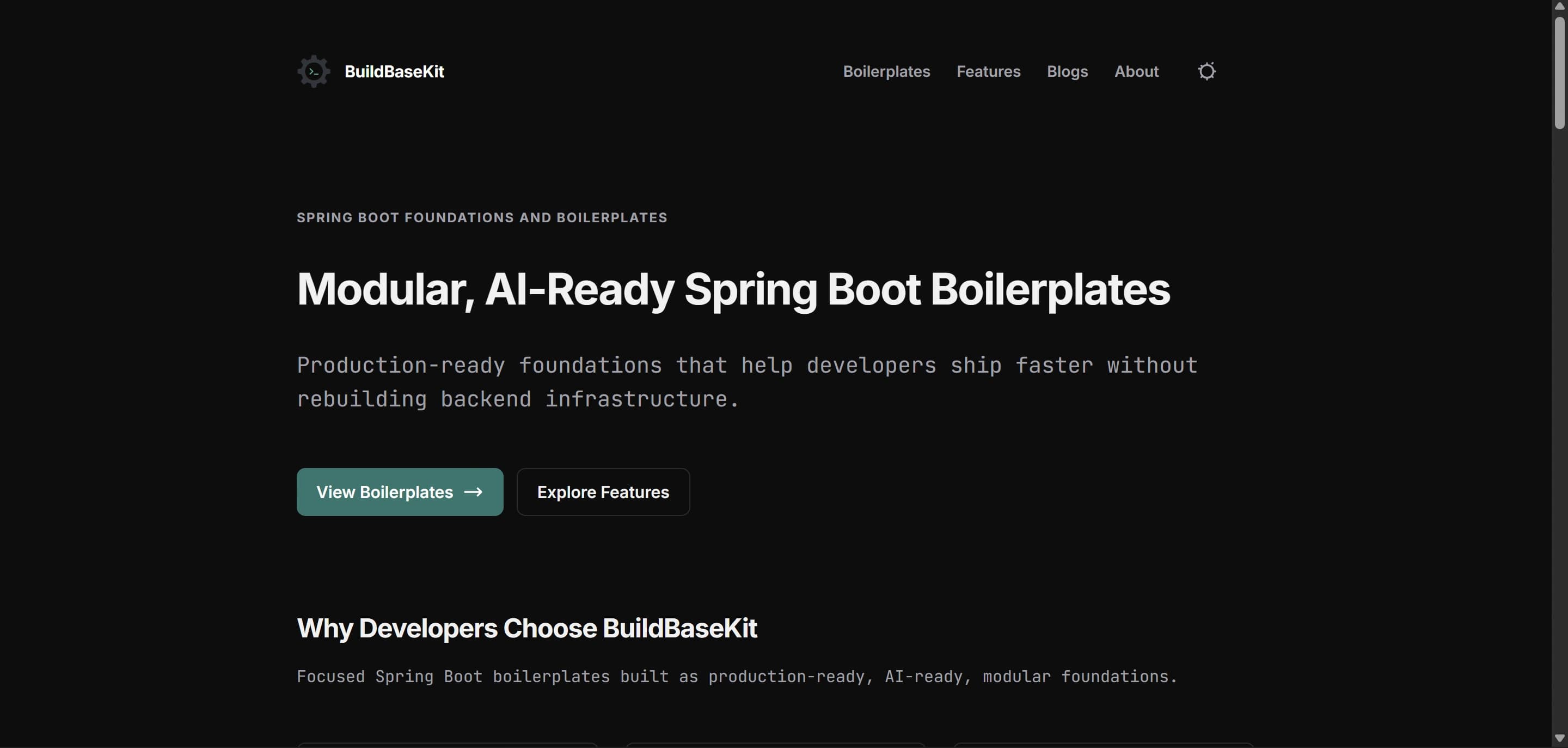
Modular, production-ready, and AI-ready Spring Boot foundations that help developers avoid rebuilding common backend infrastructure for each application.
- Founder and Developer
- Personal developer-product initiative
- May 2026 – Present
- BuildBaseKit
- Independent product · founded and developed by Amit K. Mishra
- Java
- Spring Boot
- REST APIs
- JWT
- File storage
- AWS S3
The project in operational terms.
Scope, complexity, responsibility, and business outcomes are described without unsupported statistics.
What was built?
Public free and premium products for authentication, file storage, and specialised automation, with production configuration, examples, documentation, and setup guidance.
Who uses it?
Java and Spring Boot developers adopting reusable backend starters and production-oriented file or authentication foundations.
Why does it matter?
Real applications repeatedly need authentication, access control, file storage, validation, testing, configuration, documentation, and coding-agent context before product work begins.
What did Amit own?
Amit identified the recurring problems, designed and developed the repositories, created documentation, built the website, published educational material, and manages product distribution.
What changed?
Repeated backend setup knowledge is packaged as reusable products and explicit project context that developers can inspect and extend.
Understand the operation before the technology.
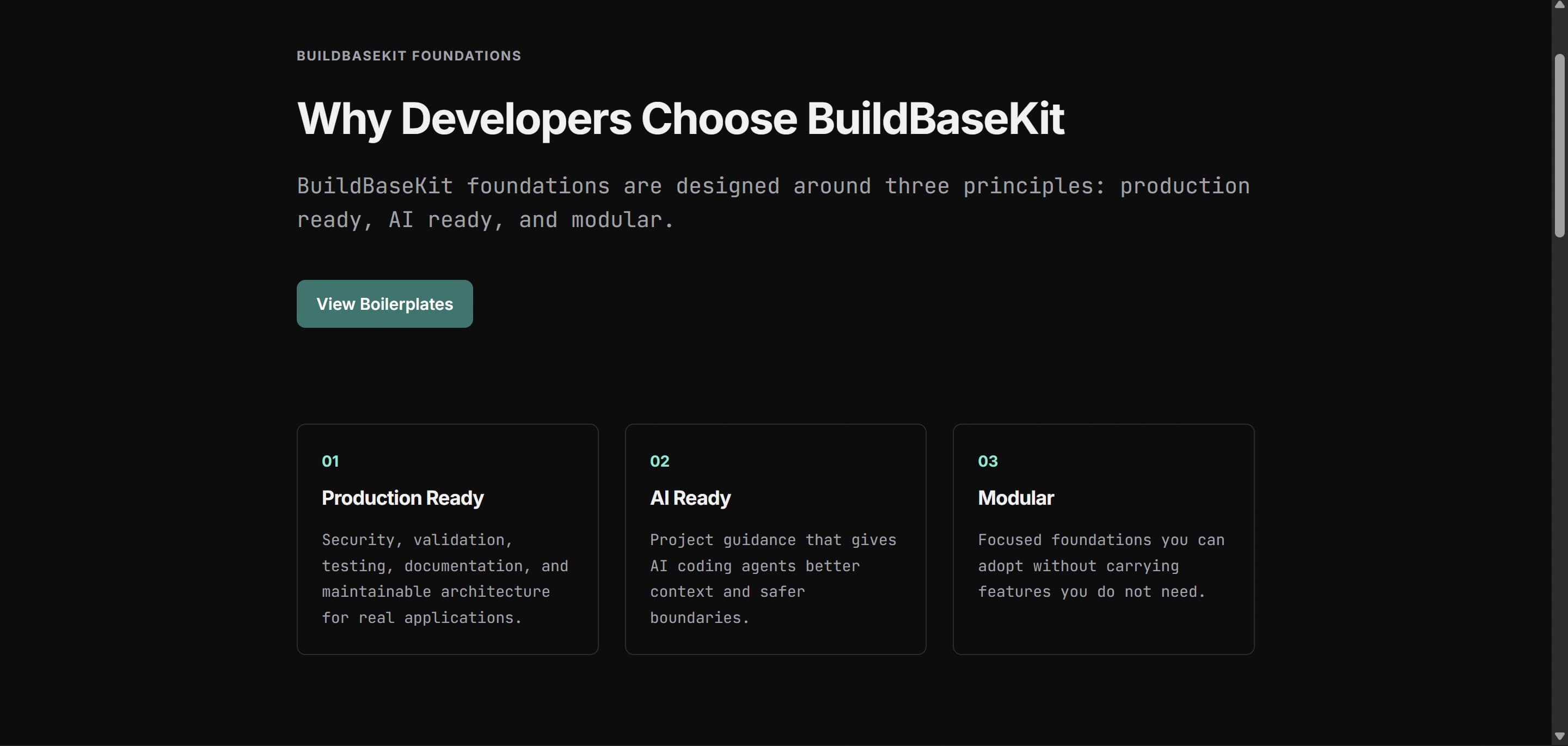
BuildBaseKit focuses on practical foundations for real applications rather than tutorial-only examples. Available products address recurring authentication, role, file, storage, configuration, validation, testing, and documentation concerns.
The projects are also structured for clearer AI-assisted development. AGENTS.md, architecture documentation, project rules, contribution guidance, explicit module boundaries, and consistent structure give coding agents better context without claiming generated changes are automatically safe.
Product capabilities.
Capabilities describe the product; Amit's contribution is documented separately below.
AuthKit-Lite · Free and public
A minimal JWT authentication starter.
- Registration and login
- Refresh-token handling
- Role-based access control
- Spring Boot application structure
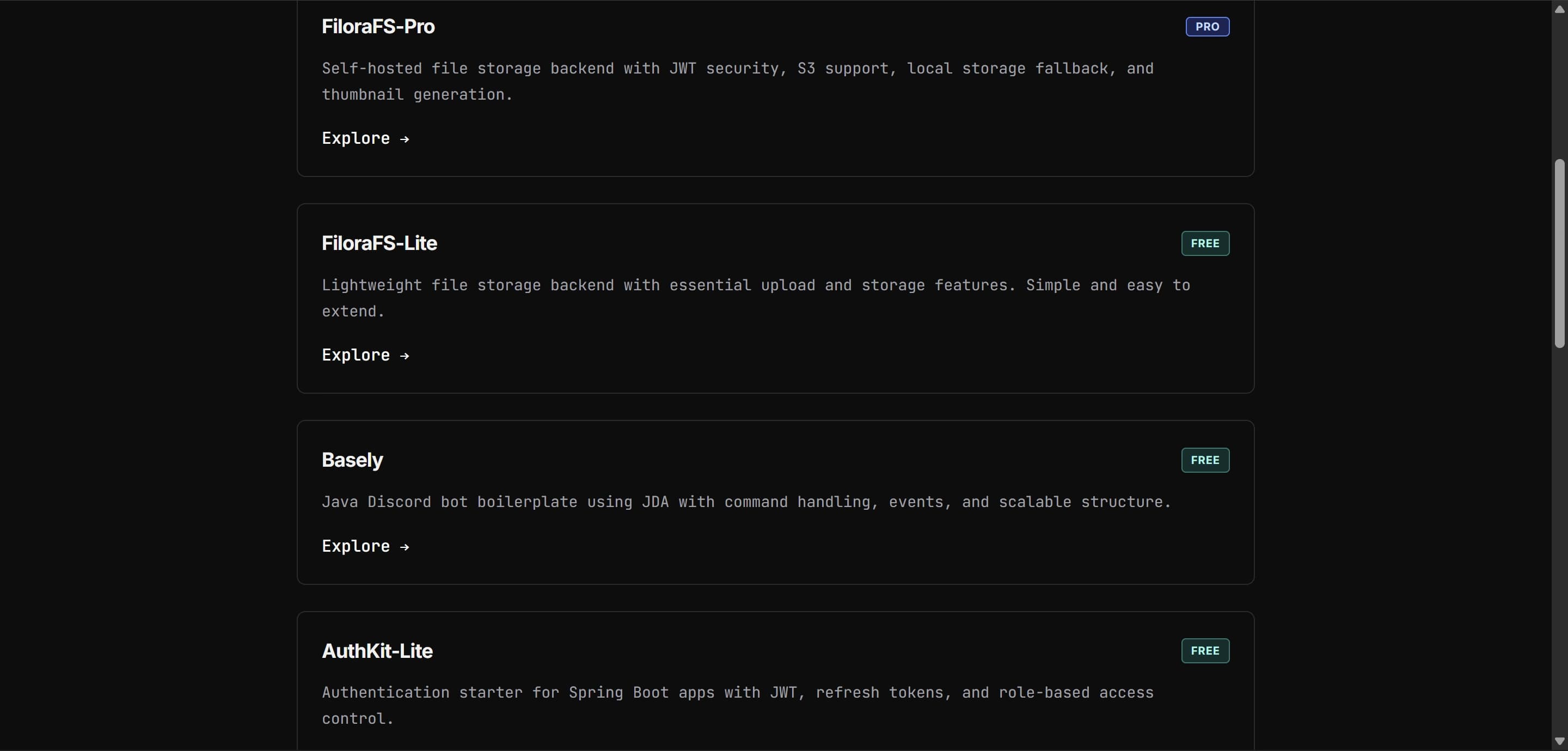
FiloraFS-Lite · Free and public
A focused file-upload and storage API foundation.
- File upload and retrieval
- Streaming and deletion
- Core file-management workflows
- Reusable Spring Boot file APIs
FiloraFS-Pro · Premium and public
A production-oriented file-storage backend.
- JWT and role-based access
- AWS S3 with local-storage fallback
- Secure APIs, streaming, pre-signed URLs, and metadata
- Automatic image thumbnails, validation, production configuration, Postman collection, and setup guidance
Basely · Free and public
A secondary, specialised Spring Boot Discord-bot starter using JDA.
- Command handling
- Moderation workflows
- Automation foundations
Modular generation · Planned
A future direction, not a launched generator.
- Selectable authentication and file modules
- Optional payment integrations
- Java and Spring Boot configuration
- AI-assisted coding documentation and optional capabilities
Amit's contribution and responsibilities.
Architecture, implementation, technical ownership, delivery coordination, production responsibility, and stakeholder collaboration are described separately to make individual contribution explicit.
01
Architecture
Designed the product and technical direction for reusable Spring Boot foundations and explicit module boundaries.
02
Implementation
Developed authentication and file-storage repositories, production configuration, examples, documentation, and the public website.
03
Independent product ownership
Independently defines the product direction, architecture, implementation, documentation, distribution, and validation strategy.
04
Delivery coordination
Manages free and premium distribution, product documentation, technical articles, and educational material.
05
Production ownership
Maintains products and setup guidance around practical application concerns without describing generic starters as complete security guarantees.
06
Stakeholder collaboration
Uses recurring backend implementation needs to shape current products and planned modular capabilities.
The boundaries that shaped the work.
These are product and delivery constraints, not a disclosure of private production configuration.
Useful but replaceable defaults
Foundations should reduce setup without hiding decisions or locking every product into one architecture.
Security scope
Authentication and file starters provide foundations, not automatic application security.
AI context is not assurance
Clear documentation reduces ambiguity but cannot guarantee safe generated changes.
Product status clarity
Free, premium, public, and planned capabilities must be clearly separated.
Reusable products today, modular generation as future direction
A static, keyboard-inspectable model with visible relationships and a complete text alternative.
BuildBaseKit product architecture
Available repositories package focused backend concerns; modular project generation remains planned.
Available products
Focused public foundations.
- AuthKit-Lite
Free JWT authentication and role foundation.
- FiloraFS-Lite
Free file API foundation.
- FiloraFS-Pro
Premium production-oriented file backend.
- Basely
Free specialised Discord-bot starter.
Implementation context
Make code and decisions understandable.
- Architecture & setup documentation
Decisions, configuration, extension, and contribution guidance.
- AGENTS.md & project rules
Explicit context for AI-assisted development.
Future direction
Clearly planned, not shipped.
- Module selection
Choose required backend capabilities.
- Project generation
Planned assembly of an appropriate starting foundation.
Relationships
- Available productsImplementation contextship with guidance and project rules
- Module selectionProject generationmay compose planned future foundations
- AGENTS.md & project rulesAI-assisted developmentreduce ambiguity without guaranteeing safety
Text alternative
Developers can adopt public AuthKit-Lite, FiloraFS-Lite, FiloraFS-Pro, or Basely repositories according to their needs. Each product combines code, configuration, examples, and documentation. AGENTS.md and architecture guidance provide AI coding tools with clearer context. A future generator may compose selected modules but is not launched.
Reviewed product interfaces.
Public screenshots are presented in full without cropping. Private product images use opaque, irreversible redaction.
Trade-offs, not slogans.
Each decision records what was selected, what was considered, and the cost accepted.
Ship focused products
- Authentication and file storage solve different recurring problems.
- Publish one oversized boilerplate containing every capability.
- Several repositories require consistent documentation and maintenance.
- Developers can adopt a relevant foundation without removing unrelated code.
Document for people and coding agents
- Reusable code needs architectural and implementation context.
- Provide code and setup commands alone.
- Documentation and project rules must evolve with code.
- Developers and coding agents receive clearer boundaries and extension guidance.
Keep generation planned
- Modular assembly needs compatibility rules before it is a reliable product.
- Present a conceptual generator as already released.
- Future capabilities are described conservatively.
- Current products remain distinct from the longer-term modular direction.
Safe examples of system behavior.
These examples are simplified and generic. They contain no credentials, client data, internal URLs, or confidential production code.
AI-ready project context
Documentation supports safer review, not automatic correctness.
Read project rules
AGENTS.md and contribution guidance define boundaries.
Understand architecture
Module and dependency documentation explains intent.
Implement within context
Coding tools use explicit structure and conventions.
Review and validate
Human review and project tests remain required.
Future modular generation
A planned direction rather than a current product.
Select capabilities
Choose authentication, files, payments, or other modules.
Configure Spring Boot
Set project and Java options.
Validate compatibility
Check supported module combinations.
Generate foundation
Planned output with code and AI-ready documentation.
Qualitative, evidence-based outcomes.
- 01Turns recurring backend setup into reusable products, documentation, and extensible project foundations.
- 02Gives developers and coding agents clearer implementation context while preserving the need for review.
What the work teaches next.
What worked
Focused products keep authentication, file storage, and specialised automation understandable.
What was difficult
Production-oriented defaults must remain useful without implying universal fit or automatic security.
What could improve
Continue strengthening compatibility, examples, testing guidance, and public documentation.
Next architectural step
Evolve individual products toward a modular generator only after composition rules are validated.
Status stated without inference.
AuthKit-Lite, FiloraFS-Lite, and Basely are free and publicly available. FiloraFS-Pro is premium and publicly available. Modular project generation remains planned.