
URV Staff Portal
An internal workforce and project-operations platform for attendance, leave, holidays, permissions, compensation, payroll-related workflows, tasks, projects, and archival records.
- Sole Full-Stack Developer & Technical Owner
- Internal HR, attendance, payroll, task, and project-management platform
- URV India Pvt. Ltd.
- Internal company product · sole developer responsible for technical implementation · collaboration with business stakeholders · confidential workforce and project data
- Next.js
- Tailwind CSS
- MySQL
- Prisma ORM
The project in operational terms.
Scope, complexity, responsibility, and business outcomes are described without unsupported statistics.
What was built?
A full-stack Next.js platform with MySQL and Prisma for employee and administrative workforce and project workflows.
Who uses it?
Authorised employees and management users; the application is not presented as a public product.
Why does it matter?
Attendance, HR, payroll-related, task, project, and planning records need controlled access and consistent lifecycle management.
What did Amit own?
Amit designed and built the portal, modelled the workflows, implemented access control, and maintained privacy boundaries for internal data.
What changed?
Workforce administration and project coordination are brought into one controlled internal system.
Understand the operation before the technology.
Workforce and project operations contain different sensitivity levels. Employee attendance, leave, compensation, payroll, tasks, and project records cannot share unrestricted visibility.
The portal models those workflows in one database-backed system while separating employee and administrative capabilities through roles and permissions.
Product capabilities.
Capabilities describe the product; Amit's contribution is documented separately below.
Attendance
Explicit check-in and check-out records with privacy-aware context.
- Employee check-in and check-out
- Device and IP information captured for authorised operational purposes
- Location information only where authorised and available
- Attendance history
Leave, holidays, and access
Employee requests and administrative decisions remain permission-aware.
- Leave requests and approvals
- Holiday calendar and leave history
- Role-based access
- Permission-aware screens, actions, and administrative controls
Compensation and payroll-related workflows
Sensitive records remain access controlled and are never exposed in public evidence.
- Compensation records
- Payroll-related workflows
- Employee payment information
- Controlled administrative access
Tasks, projects, and archival workflows
Project coordination remains linked to people and historical records.
- Task assignment and work-status tracking
- Project and Scrum planning
- Employee and project association
- Employee and project archival with retained history
Amit's contribution and responsibilities.
Architecture, implementation, technical ownership, delivery coordination, production responsibility, and stakeholder collaboration are described separately to make individual contribution explicit.
01
Architecture
Designed the full-stack application, data model, and permission boundaries across workforce and project domains.
02
Implementation
Built employee and administrative interfaces with Next.js, Tailwind CSS, MySQL, and Prisma ORM.
03
Technical ownership
Defined and implemented the application structure, data model, role boundaries, sensitive workflows, and technical delivery decisions as the sole developer.
04
Delivery coordination
Connected attendance, leave, holidays, compensation, payroll-related, task, project, and archival requirements.
05
Production ownership
Maintained privacy boundaries and controlled handling of internal workforce and project records.
06
Stakeholder collaboration
Translated HR and project-operations needs into explicit employee and management workflows.
The boundaries that shaped the work.
These are product and delivery constraints, not a disclosure of private production configuration.
Sensitive records
Compensation, payroll, attendance, device, IP, location, and employee data require strict access boundaries.
Privacy-aware attendance
Device, IP, and location context supports authorised attendance workflows and is not continuous surveillance.
Employee and management separation
Roles determine which screens, records, and actions are available.
Historical retention
Inactive employees and projects need archival without losing necessary history.
Privacy-aware workforce and project workflow architecture
A static, keyboard-inspectable model with visible relationships and a complete text alternative.
URV Staff Portal architecture
Permission-aware interfaces coordinate workforce and project records over a shared relational model.
Permission-aware interfaces
Different capabilities for employee and management roles.
- Employee experience
Attendance, leave, history, tasks, and authorised records.
- Management controls
Approvals, workforce records, projects, payroll-related workflows, and archives.
Workflow domains
Explicit internal business processes.
- Attendance & leave
Check-in, check-out, requests, approvals, holidays, and history.
- Compensation & payroll
Controlled sensitive workforce records.
- Tasks & projects
Assignments, planning, status, associations, and archives.
Data boundary
Relational persistence under access control.
- Prisma ORM
Application data access and relational modelling.
- MySQL
Internal workforce, project, and history records.
Relationships
- Permission-aware interfacesWorkflow domainsallow authorised screens and actions
- Workflow domainsPrisma ORMpersist controlled records
- ArchivesMySQLretain history outside active workflows
Text alternative
Employee and management interfaces use Next.js application services guarded by role and permission checks. Attendance, leave, holidays, compensation, payroll, tasks, projects, and archive domains use MySQL through Prisma ORM. Sensitive values remain inside authenticated boundaries and are not published in the case study.
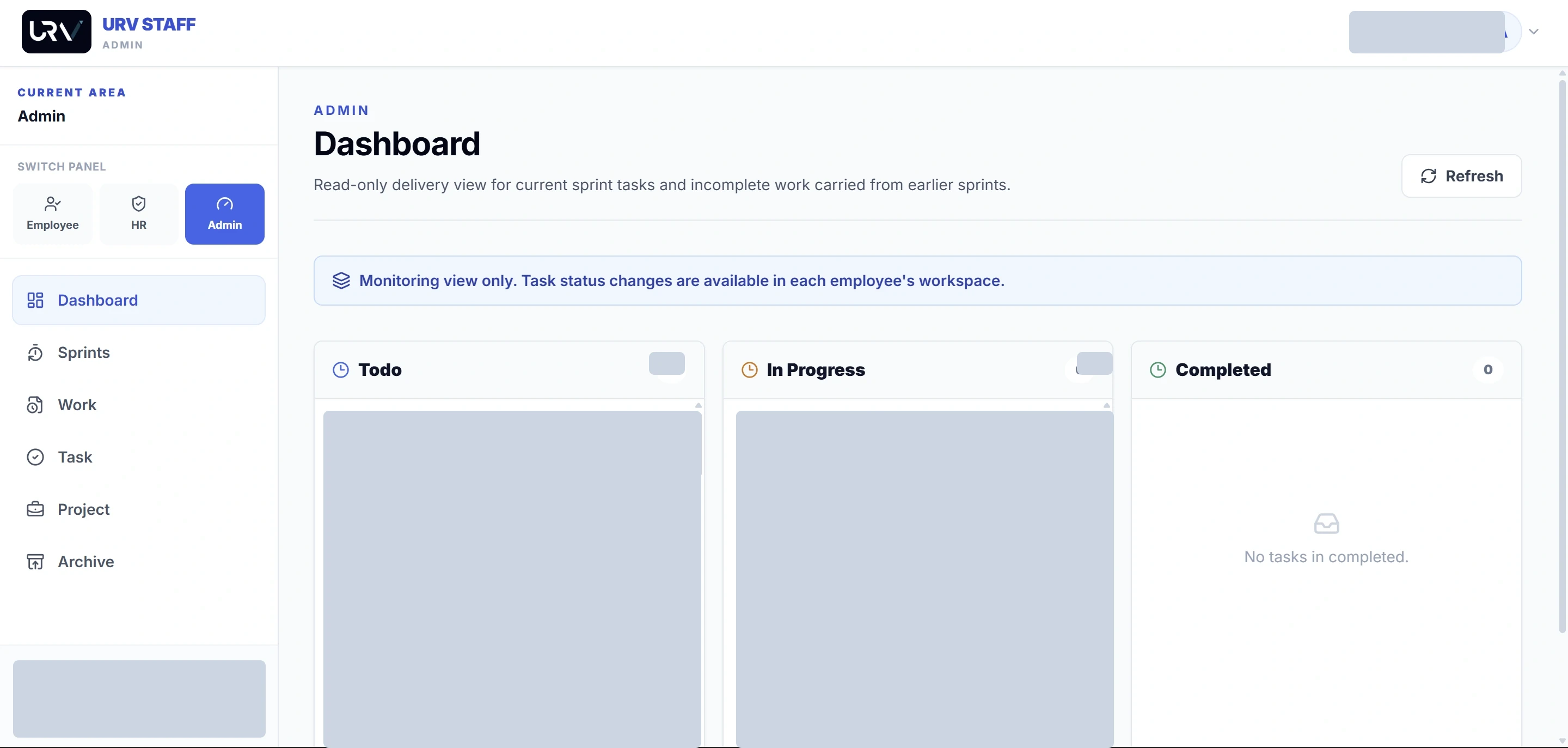
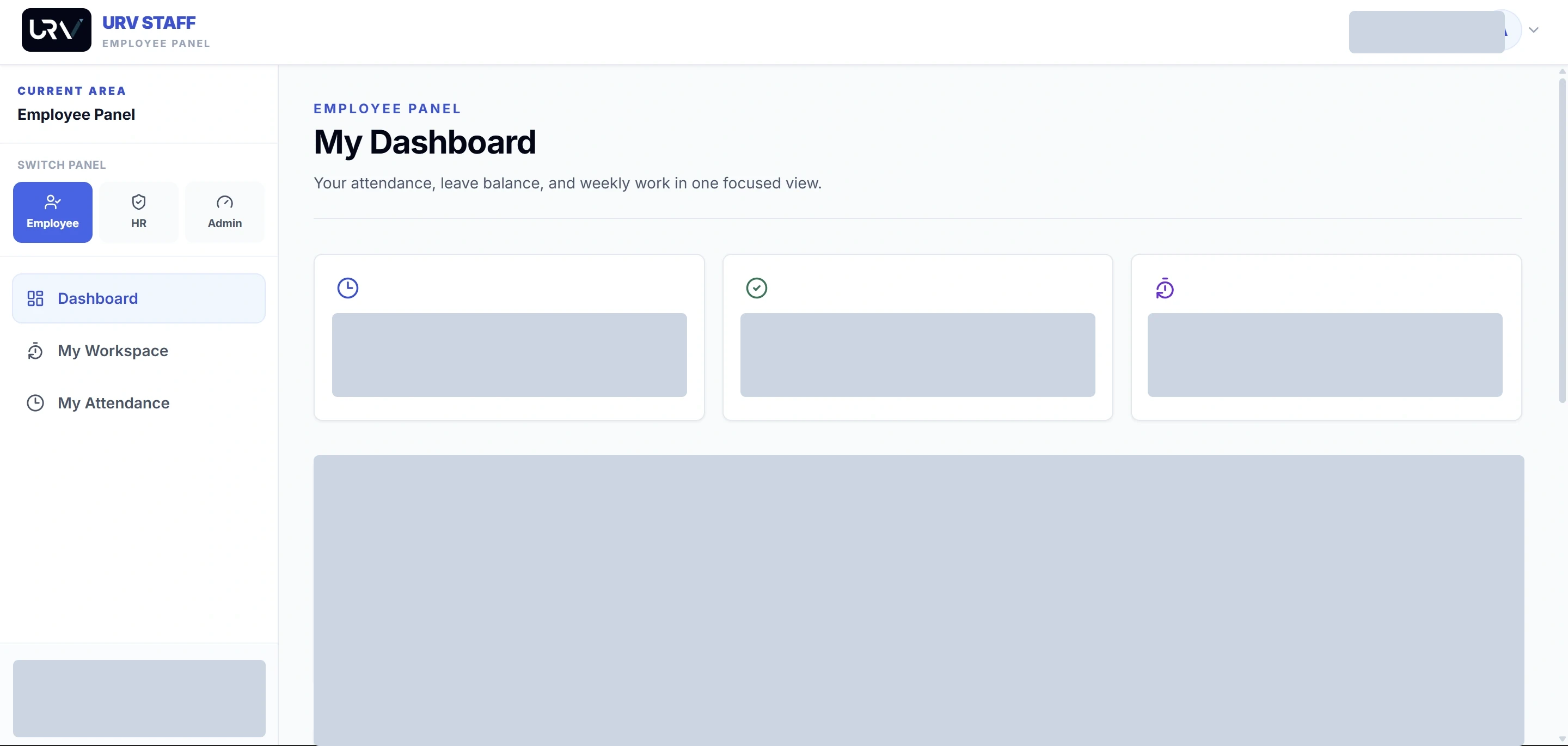
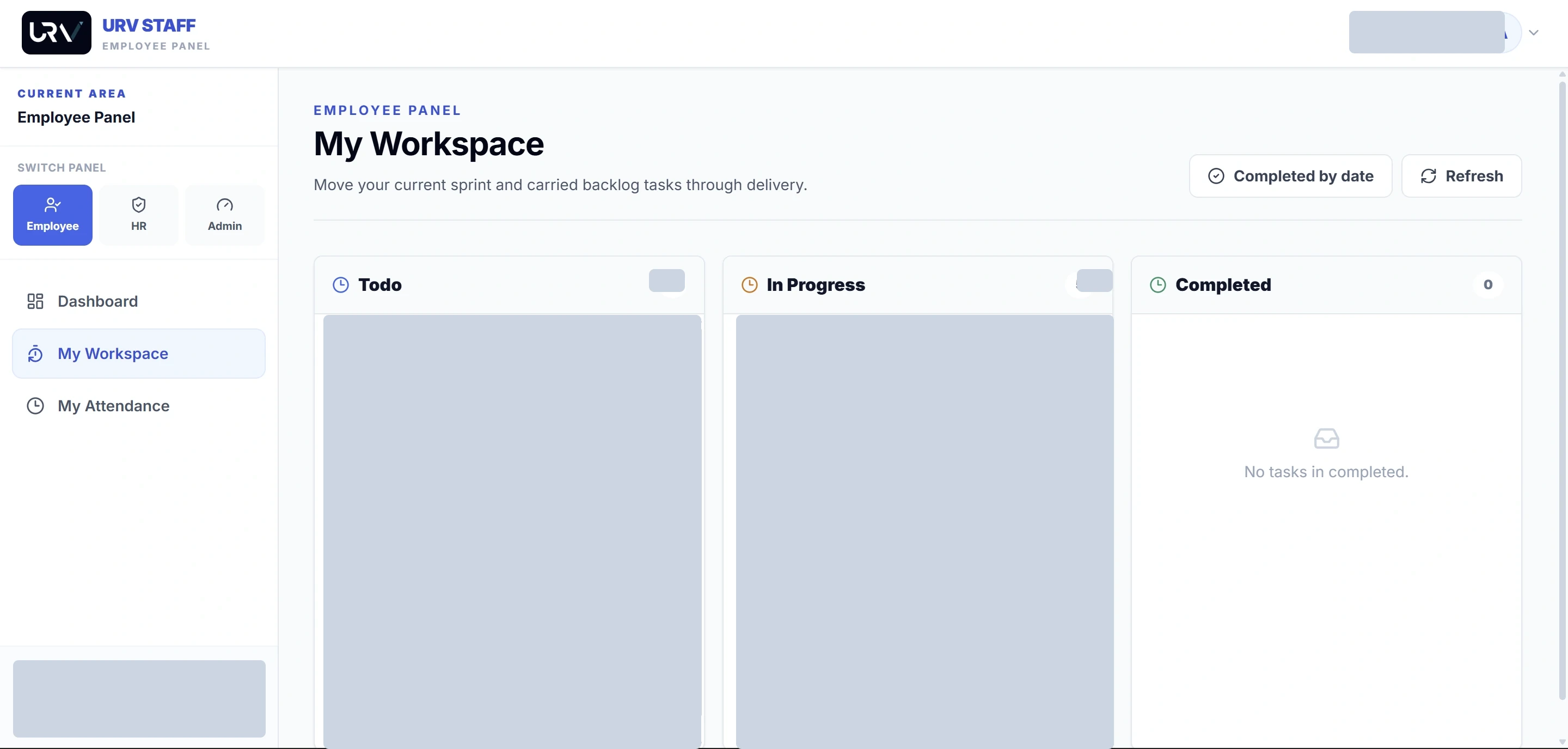
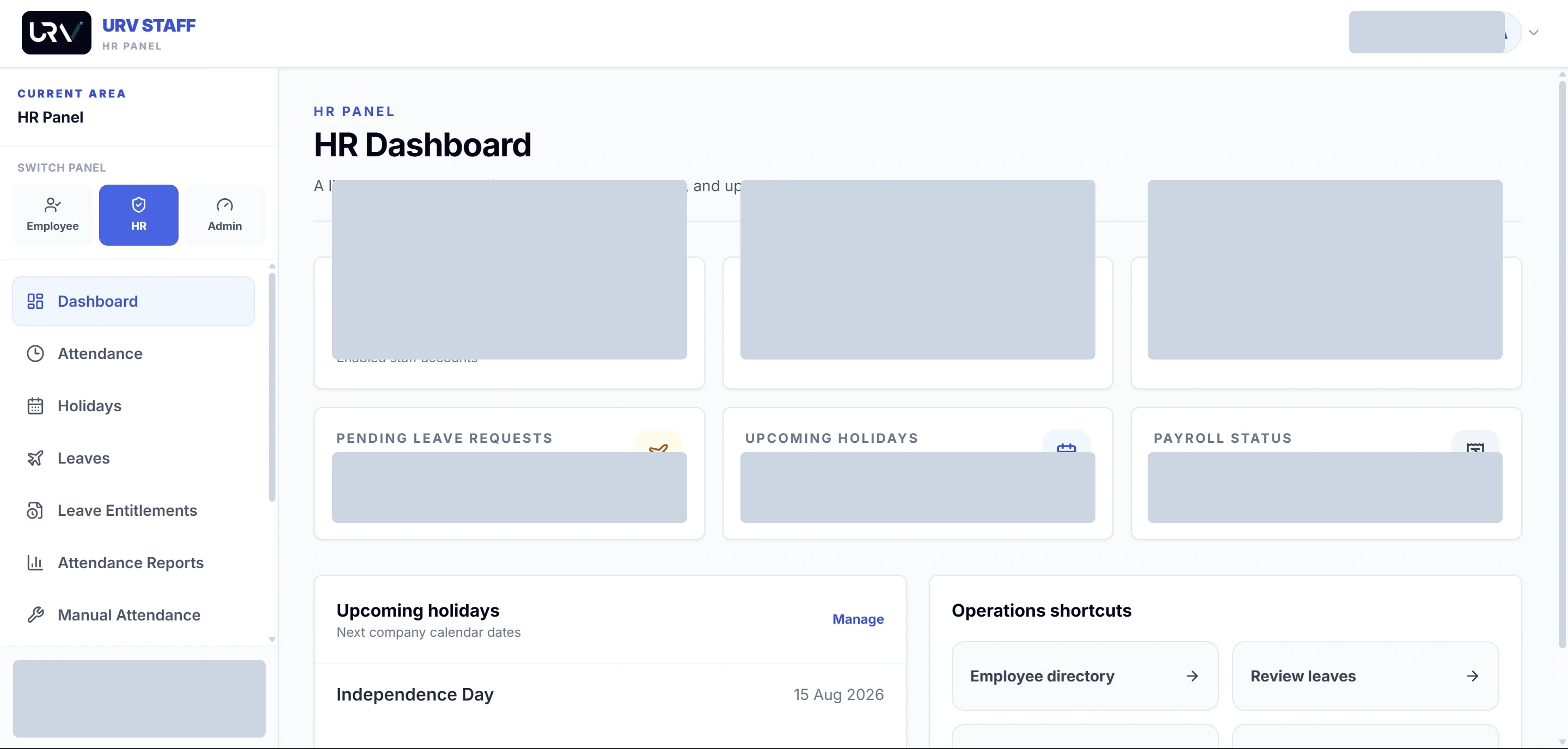
Reviewed product interfaces.
Public screenshots are presented in full without cropping. Private product images use opaque, irreversible redaction.
Trade-offs, not slogans.
Each decision records what was selected, what was considered, and the cost accepted.
Guard screens and actions
- Sensitive domains require more than hidden navigation.
- Rely only on interface visibility.
- Permissions must be applied consistently through application and data operations.
- Employee and management capabilities remain enforceable across the system.
Capture attendance context conservatively
- Check-in records may need device, IP, or authorised location context.
- Use continuous location or device tracking.
- Available context can vary and requires privacy-aware handling.
- Attendance captures event-specific context without describing invasive surveillance.
Archive instead of deleting history
- Inactive employees and projects may still relate to historical records.
- Delete inactive records from the system.
- Archived data needs clear filtering and retention rules.
- Primary workflows remain focused while necessary history is retained.
Safe examples of system behavior.
These examples are simplified and generic. They contain no credentials, client data, internal URLs, or confidential production code.
Attendance event
A privacy-aware, event-specific workflow.
Identify authorised employee
Validate authenticated access.
Capture check event
Record time and permitted device, IP, or available location context.
Update attendance history
Persist the employee-visible record.
Allow authorised review
Expose management actions through role controls.
Leave approval
Employee and management responsibilities remain separate.
Submit leave request
Employee provides required context.
Authorised review
Management user reviews under policy.
Record decision
Approve or reject with controlled visibility.
Update leave history
Keep employee and administrative records consistent.
Qualitative, evidence-based outcomes.
- 01Reduces dependence on disconnected attendance, HR, task, and planning records.
- 02Keeps workforce administration and project coordination inside one permission-aware internal system.
What the work teaches next.
What worked
Explicit roles and shared workflow data connect employee and management processes without flattening access boundaries.
What was difficult
Sensitive workforce records require careful modelling, interface design, and public-case-study restraint.
What could improve
Continue reviewing retention, audit, and permission policies as workflows evolve.
Next architectural step
Extend internal workflows only through the same privacy and access-control model.
Status stated without inference.
Active internal platform. Public material is limited to architecture, responsibilities, anonymised workflows, and non-sensitive interface guidance.